Decor: The Gothic Font for Bold Design
Imagine a typeface that doesn't just spell out words, but etches them into the viewer's memory with the gravity of medieval stone and the elegance of forged iron. This is the power of a specialized display font like Decor. In the crowded landscape of modern graphic design, where capturing attention is paramount, choosing a typeface with a strong, distinct personality is no longer a luxury—it's a strategic necessity for effective visual communication.
Understanding Decor: More Than Just Letters
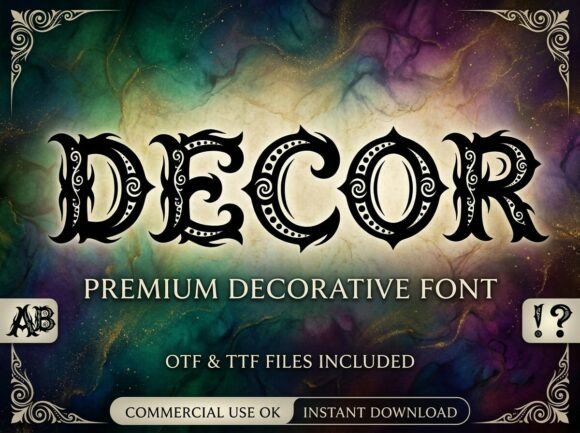
At its core, Decor is a premium decorative display font inspired by the dramatic forms of Gothic Blackletter and ornamental metalwork. It's a heavyweight capital typeface designed for impact, not for body text. Its signature lies in a sophisticated dual-layered structure: an outer frame of sharp, dynamic barbs and spikes encloses an intricate interior of hand-carved filigree scrolls and symmetrical dot arrays. This creates a visual depth that transforms simple headlines into works of fine historic art, making it an invaluable creative asset for specific design niches.
Practical Applications: Where Decor Shines
The true value of a typeface like Decor is measured by its application. Its unique aesthetic solves specific branding and design challenges across various media, helping to establish a powerful and cohesive brand identity. Consider its role in these creative projects:
- Branding & Logo Design: For brands in the alternative, luxury, or historic sectors—think tattoo parlors, distilleries, or bespoke clothing labels—Decor can form the cornerstone of a memorable logo. It instantly communicates heritage, craftsmanship, and a touch of dark romance.
- Packaging Design: On a shelf, a product must tell its story in a glance. Decor excels on luxury liquor labels, mystical tarot card boxes, or artisanal goods, where the typography itself becomes part of the unboxing experience and elevates perceived value.
- Editorial & Print Design: In magazine layouts or book cover design, particularly for genres like dark academia or historical fiction, this font commands attention for chapter titles or section headers, setting a powerful tone.
- Digital & Social Media: While not for UI body copy, Decor is perfect for impactful social media graphics, YouTube thumbnails, or website hero sections where a dramatic, single statement is needed to stop the scroll and boost engagement.
- Merchandise & Advertising: For heavy metal band merch, event posters, or streetwear branding, the font’s fiery, theatrical architecture provides the visual hierarchy and edgy appeal that resonates with target audiences.
Integrating a Display Font into Your Design Workflow
Using a potent decorative font effectively requires more than just placement; it demands thoughtful integration into your broader design system. Here are key considerations for graphic designers and creators:
- Prioritize Readability & Scalability: A highly detailed font like Decor is best used at larger sizes. Always test its legibility across different mediums—from a small favicon to a large printed banner—to ensure its intricate details hold up.
- Establish Visual Hierarchy: Pair Decor with a clean, neutral sans-serif or serif font for body text. This contrast ensures the display font commands attention without overwhelming the entire layout, maintaining balance and clarity.
- Align with Audience Expectations: The strong personality of a Gothic-inspired font resonates powerfully with specific demographics. Ensure its aesthetic aligns with your brand’s voice and the message you intend to communicate. It’s a tool for evoking a specific emotion, not a universal solution.
- Consider the Color Palette: The font’s effectiveness is enhanced by complementary colors. Deep burgundies, golds, blacks, and earth tones can accentuate its medieval and luxurious feel, while a monochromatic scheme can emphasize its stark, architectural lines.
Ultimately, the choice of typography is a fundamental pillar of professional design. A resource like Decor offers more than stylistic flair; it provides a direct conduit to a specific mood and era, strengthening brand identity and enriching the visual narrative. By selecting creative assets with intention and applying them with strategic awareness, designers and brands can craft more compelling, cohesive, and memorable visual experiences that resonate deeply with their audience.